
How to Find Who Owns a Delaware County Property
Delaware County record detail
- Delaware County record detail
- Delaware County record detail]
- Delaware County record detail
- Delaware County record detail
Where Delaware County Owner Information Comes From
Delaware County record detail
| Source | Owner Info It Gives | Access |
|---|---|---|
| Assessor / tax roll | Delaware County record detail | Delaware County record detail |
| Recorder deed index | Delaware County record detail | Delaware County record detail |
| Secretary of State | Delaware County record detail | Delaware County record detail |
| GIS parcel viewer | Delaware County record detail | Delaware County record detail |
Delaware County record detail
What "Who Owns This Property" Cannot Tell You
Delaware County record detail
Lawful use. Delaware County record detail
Use Three Delaware County Sources to Confirm Ownership
Start with the town assessment roll or SDG Image Mate to obtain Current Owners Name, mailing address, and tax map number. Next, find the latest matching deed in SearchIQS and read the grantee and legal description. Finally, review related mortgages, satisfactions, liens, judgments, probate, or foreclosure material only when the ownership question requires that context. This layered method is stronger than treating any one screen as a title opinion.
Delaware County Mailing Address Is Not Occupancy
The owner address on a roll is where notices are sent. It may be the property, a post office box, an out-of-county address, or an entity service address. It does not identify who lives at the site. Preserve that distinction when asking who owns this house. Public owner information supports property diligence, deed research, boundary work, and civic transparency, not harassment.
LLCs, Trusts, and Estates in Delaware County Records
A grantee shown as an LLC or corporation needs another step. New York's Corporation and Business Entity Database can confirm entity status and a service address. It will not necessarily surface every beneficial owner. A trust may appear under the trustee's name. An estate transfer may require Surrogate's Court authority. Match the exact vesting language in the deed records. Do not shorten it to a person. The official statewide entity page shows the search route. Open the New York entity source.
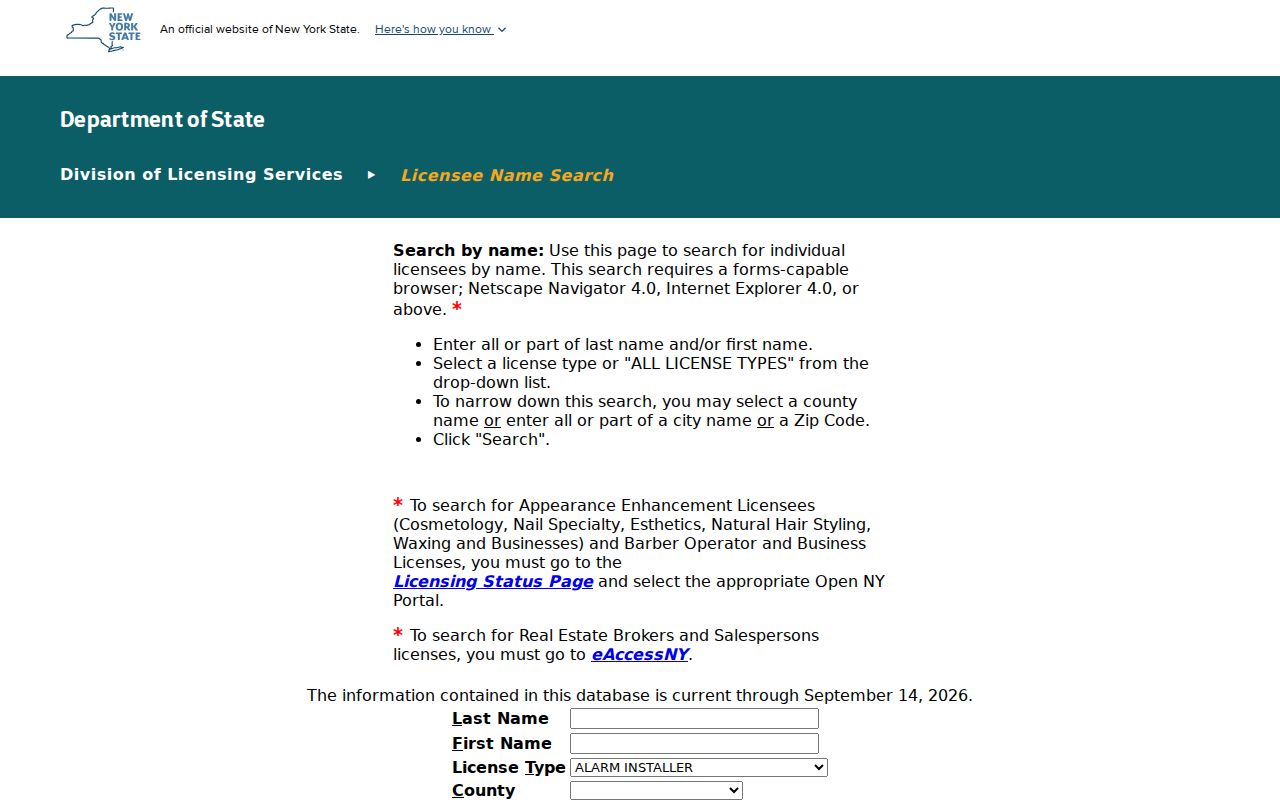
Entity research adds context around the grantee. The recorded deed remains the true evidence of the parcel transfer.
Protected Delaware County Owner Addresses
New York's Address Confidentiality Program can substitute an Albany mailing address. It also restricts the real one. Confidential voter procedures and sealed court information follow separate rules of their own. An unusual or limited address in the parcel record is not an invitation. It should never be used to reconstruct a protected location. Use the fewest identifiers needed to match the property. If a legitimate record looks incomplete, ask the custodian directly.
Names Alone Do Not Settle Who Owns a Delaware County Property
Two people can share a name, and one owner can appear with initials, a former surname, a trust label, or an entity suffix. Match the name to the municipality, parcel, account, deed reference, and legal description. If a foreclosure or estate appears in the chain, identify the instrument that actually vested title rather than assuming that a case filing changed ownership.
Recorded mortgages and liens affect the property without necessarily changing the owner. Search for later satisfactions and releases before describing their status. For a decision that depends on clear title, use a title professional rather than a public-record summary.
An owner search should stay tied to the property question and use no more personal data than necessary. When sources differ, report both dates and ask the custodian to confirm the newer record instead of selecting the result that merely looks more convenient.
Distinguish Delaware County Ownership From Encumbrances
A deed names a grantee. It does not always tell the whole story. Mortgages, liens, judgments, and easements can burden a parcel without creating a new owner of record, so look for later assignments, satisfactions, releases, and court outcomes before deciding what they mean today. A foreclosure filing alone proves nothing about title. Only the deed that follows it shows a transfer.
Some ownership questions take extra care. Tax foreclosure moves through the Treasurer and the courts on its own timeline. Probate may hand an executor or administrator the power to act before any estate deed is recorded. Trust and entity grantees must be read exactly as written, and their state entity status checked. Whatever the answer, state the source and the effective date rather than hiding these qualifications.
Use Delaware County Owner Information Lawfully
Public land records serve real purposes. Purchase and sale diligence, boundary research, tax questions, estate work, and house history all draw on them. What they cannot do is establish who sleeps at an address or justify unwanted contact. Send a legitimate property communication to the roll mailing address. Stop if it becomes unwelcome.
Some limits deserve respect. New York's Address Confidentiality Program can substitute a mailing address for a protected participant. Voter, motor-vehicle, vital, and court records each follow their own access rules. Combining them to defeat a protection is not lawful. When an official source withholds or substitutes a detail, accept the limit. Ask the custodian what record may lawfully be provided.
Document the Delaware County Owner Conclusion
Write down the town and the parcel number. Also note the roll year, owner field, deed citation, recording date, and the legal-description match. If the roll and the deed differ, state both and note which is newer. If an entity or estate appears, record what the public file actually shows. Never claim undisclosed people own the property. This audit trail lets another reader repeat the search. It also frames the answer honestly. It is an owner-of-record finding at a stated date. It is not a guarantee of occupancy, beneficial ownership, or clear title.
Careful work deserves careful records. Keep the parcel number, municipality, source, and effective date together. Do this whenever you document an ownership conclusion. The current grantee may not match the roll. Resist the urge to guess which name wins. First confirm that both records concern the same parcel. Then check for a newer corrective, estate, referee, or tax deed. Ask the Clerk or assessor about their respective dates. The deed may be newer while the roll still reflects an earlier snapshot. A roll change, in turn, should be traced to its documentary source. Only then should anyone treat it as proof of title. Until the conflict is resolved, state it plainly, with citations and dates.