
The Values on a Delaware County Property Record
Delaware County record detail
| Value | What It Is | Where |
|---|---|---|
| Assessed value | Delaware County record detail | Delaware County record detail |
| Market / appraised value | Delaware County record detail | Delaware County record detail |
| Last sale price | Delaware County record detail | Delaware County record detail |
| Land vs improvement | Delaware County record detail | Delaware County record detail |
Delaware County record detail
Looking Up a Delaware County Property Value
Delaware County record detail
- Delaware County record detail
- Delaware County record detail
- Delaware County record detail
- Delaware County record detail
- Assessed value
- Delaware County record detail
- Market / appraised value
- Delaware County record detail
- Level of assessment
- Delaware County record detail
What a Delaware County Assessor Value Is Not
Delaware County record detail
Value vs price. Delaware County record detail
Read the Delaware County Full-Market Field in Context
A full-market figure is not a fresh appraisal. It is derived inside the assessment system from the local level. The roll lists land assessment, total assessment, taxable values, and exemptions beside it. Before quoting any number, pin down the town, roll year, valuation date, and level of assessment.
Local Ratios Change Delaware County Comparisons
Why does the same house look cheap in one town and steep in another? Ratios are the reason. Stamford's 2026 tentative roll lists a 14.50 percent uniform percentage. Deposit reports 3.40 percent. Raw assessments simply cannot be compared across municipalities without that context. New York equalization rates exist to keep tax allocation fair between towns. They are not a promise that any parcel estimate equals what a sale appraisal would say.
Sale Price Lives in a Different Delaware County Record
Sale price is not an assessment figure at all. It lives in the deed, along with the RP-5217 transfer context. The recorded consideration there can reflect family terms, partial interests, multiple parcels, or other special conditions. Before treating a sale as a comparable, match the deed's legal description to the parcel you care about. The recording date should match too. The assessment roll's deed book/page entry is the bridge. It points you from the roll straight to the transfer record that holds the price.
Dates Explain Many Delaware County Value Gaps
Timing explains many Delaware County value gaps. The 2026 Stamford roll works from a July 1, 2025 valuation date. A March 1, 2026 date sets taxable status. So a later sale can sit comfortably beside an older assessment snapshot. Exemptions shave taxable amounts for qualifying purposes. But they do not always move the total assessment or the market estimate. A lender, sale, estate, or litigation question deserves a licensed appraisal. It should be tied to its own effective date. The assessment-roll selector documents available years and towns. And the official Delaware County roll source shows what each year covers.
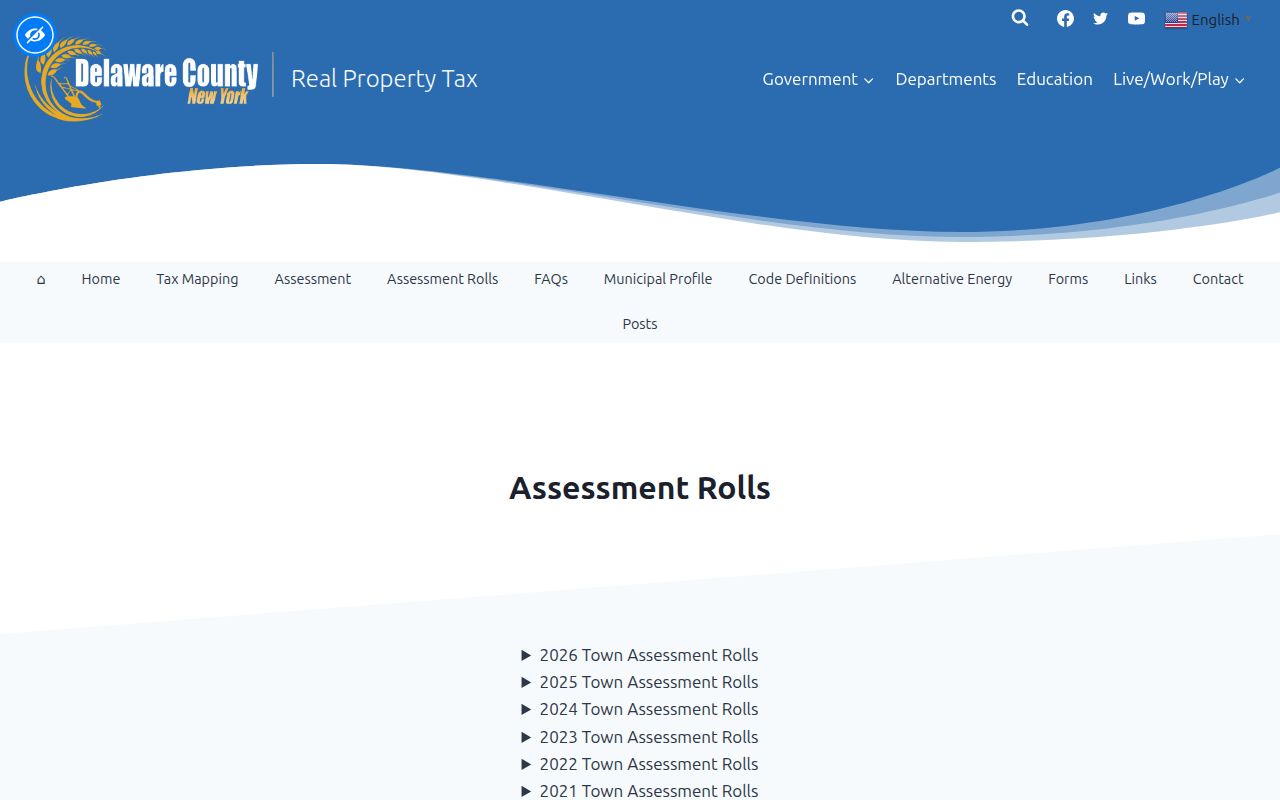
The source helps readers select the dated record that actually supports a value comparison.
Land, Total, and Taxable Values Serve Different Jobs
Each value field does a different job. Land assessment isolates the land alone. Total assessment covers the parcel as the roll defines it. Exemptions for particular taxing purposes drive the difference, so county, town, and school columns can vary for one parcel. Full-market value is a derived estimate under the local level. Quote the label and year with every number.
Class, acreage, improvements, and local practice explain a number. None of them guarantees a sale result. For a live transaction, inspect the property, choose valid comparable sales, weigh condition and rights conveyed, and order an appraisal when the stakes justify it.
A Delaware County Value Search Stops Before the Tax Bill
Value research answers what each roll number means and where sale consideration is recorded. It stops before the tax bill. The bill, payment status, delinquency, exemption applications, and grievances belong elsewhere. The collector, Treasurer, assessor, or review route handles them. Keeping those questions separate keeps the property value answer honest. It also stops a full-market estimate from posing as tax due.
Normalize Delaware County Values Before Comparing Them
Compare like with like. Match the valuation date, municipality, class, and value field. Convert assessments through the local level only when the source supports it, and label the result as a roll-derived full-value estimate. Never set Stamford's assessment beside Deposit's when their uniform percentages differ that sharply.
Condition, acreage, rights, improvements, and exemptions matter too. A roll separates land from total without inspection detail. Comparable-sale analysis demands arm's-length transfers and a consistent effective date.
Audit a Delaware County Sale Reference
Pull the deed book and page cited on the roll. Then check the recorded deed itself. Verify the grantor, the grantee, the recording date, and the legal description. Check the parcel count and the consideration context too. Not every sale reflects ordinary market value. A nominal transfer, a family transfer, an estate transfer, or a foreclosure can sit far from true market value. A multi-parcel deal can too. None of these show what a willing buyer would pay today. Treat the last recorded sale as history, not as a standing appraisal.
For a custom sale dataset, RPTS takes report requests. Selected fields, filters, and a stated minimum fee apply. Choose your town, dates, classes, and output fields with care. Save the report date. Later recordings can change the sample.
State Delaware County Value Conclusions Precisely
Precision is mostly a labeling habit. Say assessed value for the assessment, taxable value once exemptions apply, roll full-market value for the derived estimate, and recorded consideration for the deed amount. Say appraised value only with a qualified appraisal. These labels keep one public number from posing as another, so quote the roll year, town, valuation date, and source every time.
Disclose timing too. A parcel that sold after the valuation date deserves a flag. Physical changes can lag the roll inventory. A careful value statement stays limited, dated, and reproducible.
Keep source and label beside every value. Note the town, roll year, and effective date too. That small habit stops a later reader from confusing a taxable figure, assessment, market estimate, or recorded consideration.