
What Delaware County Property Tax Records Show
Delaware County record detail
| Field | What It Shows | Where |
|---|---|---|
| Assessed value | Delaware County record detail | Delaware County record detail |
| Market / appraised value | Delaware County record detail | Delaware County record detail |
| Exemptions | Delaware County record detail | Delaware County record detail |
| Tax bill & status | Delaware County record detail | Delaware County record detail |
| Taxing districts | Delaware County record detail | Delaware County record detail |
Delaware County record detail
Looking Up a Delaware County Tax Bill
Delaware County record detail
- Delaware County record detail by address or parcel]
- Delaware County record detail
- Delaware County record detail
- Delaware County record detail
- Assessed value
- Delaware County record detail
- Mill rate / levy
- Delaware County record detail
- Homestead exemption
- Delaware County record detail
- Tax lien
- Delaware County record detail
Appealing a Delaware County Assessment
Delaware County record detail
Appeal window. Delaware County record detail with the Delaware County record detail; missing the window means waiting for the next cycle.]
Delaware County Tax Records Begin With a Town Roll
The county posts tentative and final assessment rolls for all nineteen towns. Pick the municipality and year. Enter the parcel number next. It unlocks land assessment, total assessment, exemptions, taxable amounts, school district, and a full-market estimate. Owner name and owner address sit in separate fields. A roll reflects assessment status rather than one receipt for every town, village, and school levy.
Stamford and Deposit Use Different Assessment Levels
New York's level-of-assessment system lets identical assessed figures imply very different full values across towns. Stamford's 2026 tentative roll states a 14.50 percent uniform percentage. Deposit lists 3.40 percent. Never compare values without the ratio and valuation year. Stamford uses July 1, 2025 as its valuation date. March 1, 2026 is its taxable-status date.
Exemptions and Delaware County Review Forms
Each exemption has its own paperwork. STAR, enhanced STAR, agricultural, forest, senior, and volunteer firefighter or ambulance provisions follow distinct forms and eligibility rules. A roll may show one exemption code. Yet county, town, and school taxable amounts can still differ. Real Property Tax Services publishes grievance material, RP-524 instructions, and Small Claims Assessment Review information, while the local assessor and calendar set the filing route.
The county forms page is the official starting point. Open Delaware County assessment forms.
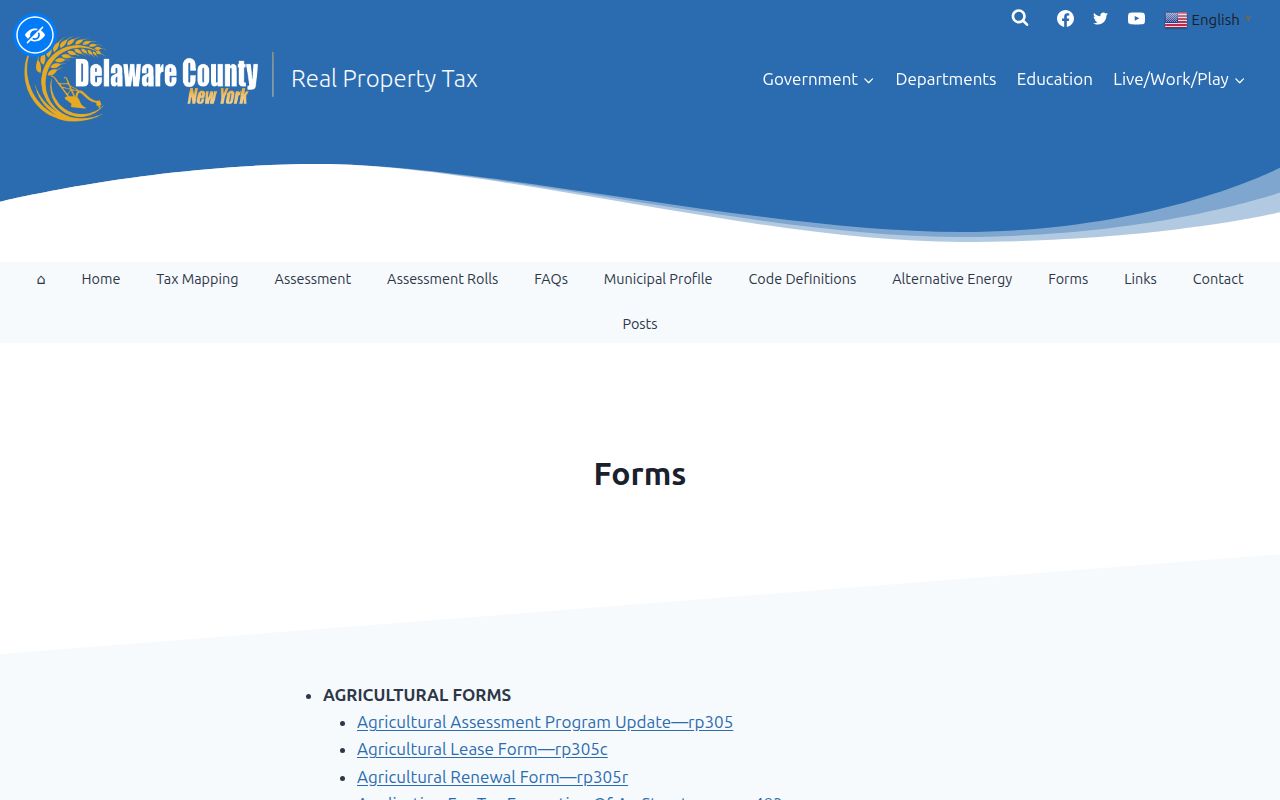
The captured source groups challenge forms with exemption and transfer-related material.
Delinquent Delaware County Taxes Move to the Treasurer
Current taxes normally go to the responsible town, village, or school collector. Delinquent real-property taxes are different. Tax searches, foreclosure property, and the county payment route belong to the County Treasurer. Confirm the levy year and collector before paying anything. A dated county initiative describes movement toward online and in-person foreclosure-auction infrastructure and notes village limitations, so verify auction details at the time of use.
A roll value is not a sale price. A tax balance is not a title report. The recorded deed shows the transfer, and later releases or judgments reveal encumbrances.
Custom Delaware County Tax Reports Serve Wider Searches
One parcel row sometimes is not enough. The Real Property Information Request form fills that gap. It lets you select fields such as owner, address, property class, acreage, sale price, and sale date, with filters and output choices. The form states a $50 minimum report fee. It is the documented route to a tailored dataset, not a public street browser or a current tax-bill portal.
Define the municipality, roll year, criteria, and fields before ordering. Broad owner or address requests invite misleading matches. Keep SWIS and parcel identifiers attached. A report reflects the county data and effective date used to make it, so later deeds and assessment changes still need confirmation.
Delaware County Roll Dates Control the Answer
A tentative roll can change. A final roll will not show a deed recorded after its ownership snapshot. Tax rates do not transfer between levy years either. So record the status, year, valuation date, taxable-status date, municipality, and exemption fields whenever quoting a tax figure. That habit separates assessment questions from payment questions.
Preserve the town, parcel number, roll status, valuation date, taxable-status date, levy year, and collector. Say where each figure came from. Assessment roll, collector bill, payment record, or Treasurer delinquency search: the labels prevent needless disputes.
Separate the Delaware County Assessment From the Bill
An assessment is a valuation record prepared for taxation. The bill applies rates and levies from the relevant jurisdictions. Payment status tells you whether a charge was paid. Delinquency and foreclosure are later enforcement stages. These records share a parcel number without answering the same question. Quote each number with its source, year, and taxing purpose.
Town, village, school, county, and special-district amounts follow different calendars. Their collection routes differ too. Begin with the local collector for a current levy. Move to the Treasurer when a charge turns delinquent or enters county foreclosure work. A missing county delinquency entry does not mean every local bill is paid.
Read Delaware County Exemptions by Taxing Purpose
An exemption code on the roll can shrink one taxable column while leaving others alone. Read the county, town, and school taxable fields directly. Do not subtract one amount from every levy. STAR and enhanced STAR concern school-tax treatment. Agricultural, forest, senior, and volunteer provisions follow their own statutes, forms, dates, and local administration.
A missing exemption deserves a closer look. First confirm the roll status and taxable-status date. Then contact the assessor with the application record and parcel identifiers, since eligibility and timely filing depend on the program. A prior-year exemption does not guarantee treatment in later years.
Prepare Evidence for a Delaware County Assessment Question
Gather the right materials first. That means the parcel number and property class. Add inventory details, the valuation date, and the correct comparable period. Photographs, condition facts, arm's-length sales, surveys, and corrected property data tend to carry more weight. A bare complaint about a higher bill does not. Follow the local grievance calendar and the RP-524 instructions carefully. Then use the SCAR route only when its rules actually fit your situation.
Know what a challenge can fix. An appeal addresses the assessment itself, not ownership title or a collector's arithmetic. A recorded deed gets corrected through the land-record process. An assessment fact goes through the assessor, and a payment posting through the collector. Send each issue to the office that owns it. That saves time and preserves your appeal rights.
Preserve whatever page or roll line backs the figure you were quoted. Note whether that source counts as tentative or final. A change of ownership makes the comparison sharper. Line the roll snapshot up against the deed date. When a payment itself is disputed, pull the collector or Treasurer record tied to that exact levy. Do not trust the assessment entry alone. That dated trail keeps valuation, billing, payment, and enforcement clearly apart.