
Delaware County Deed Records and What They Show
Delaware County record detail
| Deed Type | What It Does | Common Use |
|---|---|---|
| Warranty deed | Delaware County record detail | Delaware County record detail |
| Quitclaim deed | Delaware County record detail | Delaware County record detail |
| Grant / special warranty | Delaware County record detail | Delaware County record detail |
| Trustee / executor deed | Delaware County record detail | Delaware County record detail |
| Tax deed | Delaware County record detail | Delaware County record detail |
Delaware County record detail
The Delaware County, New York Grantor-Grantee Index
Delaware County record detail
- Delaware County record detail
- Delaware County record detail
- Delaware County record detail
- Delaware County record detail
- Grantor
- Delaware County record detail
- Grantee
- Delaware County record detail
- Chain of title
- Delaware County record detail
- Book/Page vs Instrument #
- Delaware County record detail
Getting a Copy of a Delaware County Deed
Delaware County record detail
Recorded, not guaranteed. Delaware County record detail
Delaware County Deed Coverage Has Two Depths
SearchIQS offers deed records for Delaware County on two different clocks. Current index entries and images run from 1991 forward. Grantor-grantee index data reaches back to 1797. Images from the oldest deed and mortgage books exist only for certain runs. Index depth and image depth are not the same thing. Before requesting an offline volume, note the instrument type and recording date. Also record the parties, book/page or instrument reference, and legal description. The county's coverage page lists which series are available. Read the Delaware County coverage source.
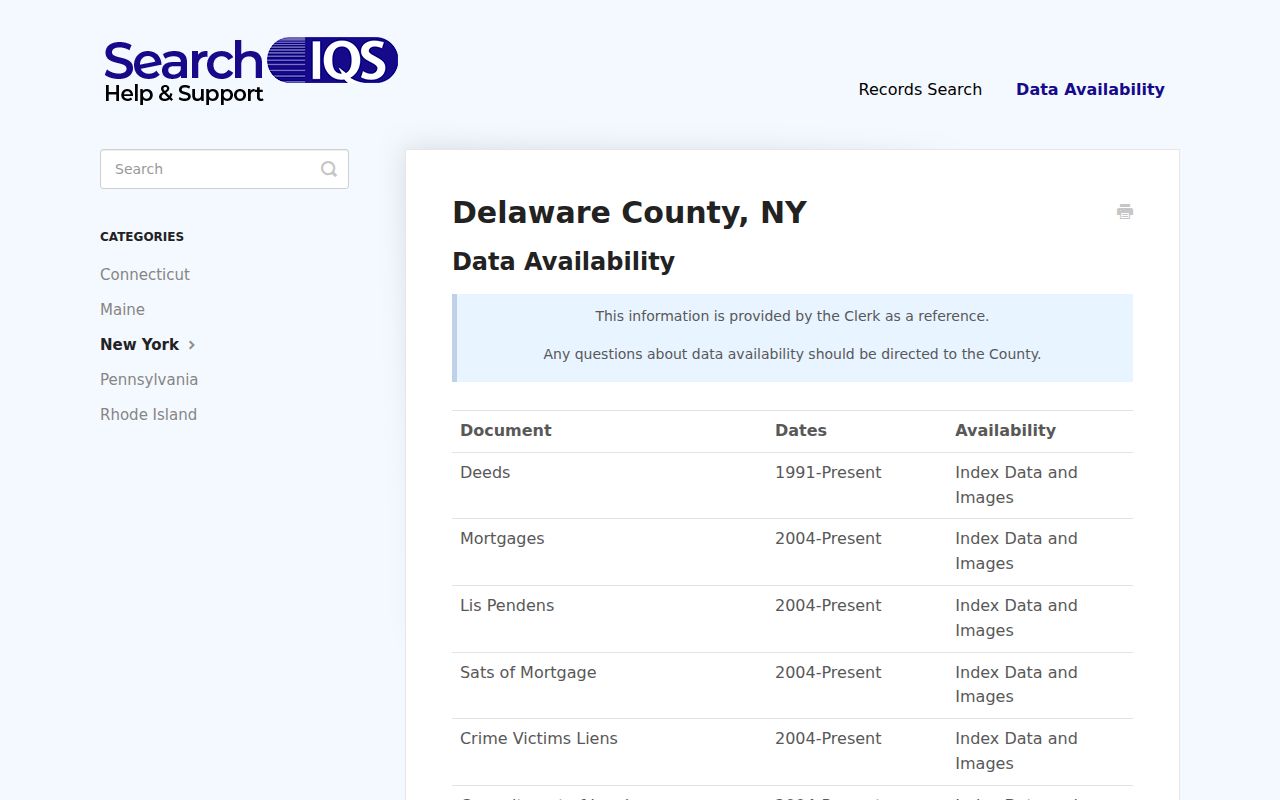
The county's coverage page shows which index entries lack a downloadable image.
Read Related Instruments With the Delaware County Deed
A deed conveys an interest. A mortgage secures a debt. Assignments move mortgage rights between lenders, and satisfactions or releases clear recorded claims. Judgments, liens, maps, and fixture filings round out the picture. Search the original instrument, then chase its status documents. A deed alone never proves that every lien was released. An old mortgage on file may not even be open anymore. The Clerk's service page explains land search, recording, counter, and mail routes. See Delaware County Clerk land-search instructions.
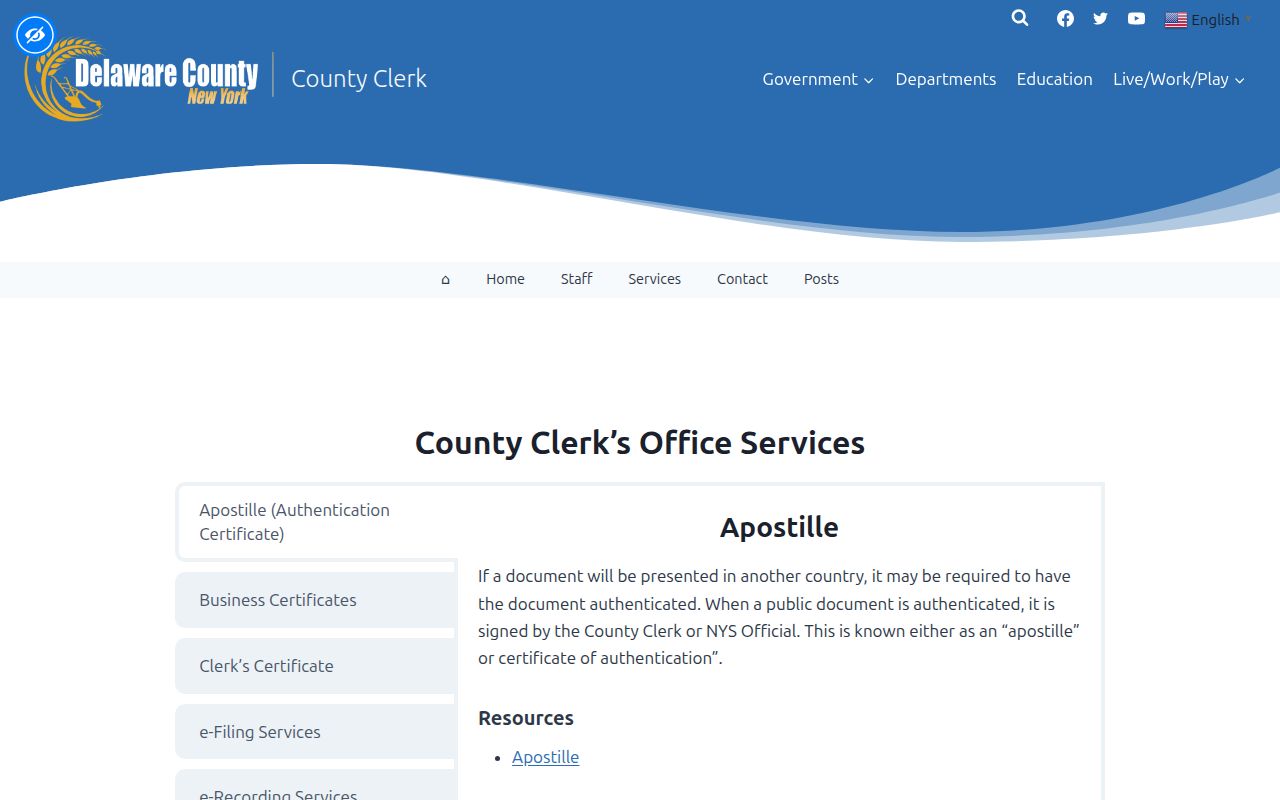
The Clerk's office handles requests for images, certifications, and older books unavailable through the portal.
Historic Delaware County Descriptions Can Change Shape
Early deeds rarely carry modern tax map numbers. To connect an old conveyance to today's parcel, work with names and adjoining owners. Acreage, roads, streams, great lots, and metes-and-bounds calls help too. A tax-map revision table can trace a parent parcel after a split or combination. Around Pepacton and Cannonsville, filed subdivision maps and Water Supply records are especially helpful. Acquisitions and road changes there produced unusual chains of title.
The 1820 courthouse fire matters too. Replacement books, later indexes, microfilm, County Historian material, and court series may all be needed to bridge a gap. The 1871 courthouse history helps explain the archival trail. If probate, foreclosure, or a judicial order gave authority for a transfer, compare the deed against the relevant Surrogate's Court or County Clerk file.
Copies and Recording Fees Need a Current Check
The Clerk fee schedule effective October 6, 2025 breaks charges apart line by line. Deed recording components carry their own figure. Cover pages, cross-references, maps, mortgages, liens, UCC matters, ordinary copies, and certifications do too. Transfer-related forms and tax add requirements that differ from any copy charge. Match the schedule to the exact service you need. Then confirm with the office before mailing payment.
An online image works fine for research. A certified copy carries the Clerk's certification, which is what most transactions demand. When ordering, give the office party names. Add the recording date, instrument type, and the book/page or instrument number. For a historical book, add the portal index entry. Note whether the page image was absent. Those specifics spare staff a broad, costly search and point them to the right series.
Delaware County Deeds Do Not Guarantee Clear Title
Recording a deed creates a public record and fixes priority context. It does not offer a legal opinion on every interest. Unrecorded rights, description problems, probate issues, open liens, and competing claims can all survive. Search later releases and related court records first. Then turn to a New York attorney or title professional whenever the conclusion will support a purchase, financing, an estate, or a dispute.
Keep the municipality, parcel number, and legal-description clues. Add the recording date, instrument type, exact party spelling, and the index's document reference. Those details unlock any later certified-copy request.
Build a Delaware County Instrument Worksheet
For each deed, note the instrument date. Record the recording date, grantor, grantee, deed type, and consideration if stated. Capture the book/page or instrument number, tax map reference, and full legal-description clues. Add a column for the source image or certified copy. Walking backward works simply. The grantor on the current acquisition deed becomes the grantee you search for next. Confirm the earlier instrument conveyed the same land before adding it to the chain.
A quitclaim deed transfers whatever interest the grantor holds. It comes without the warranties of other forms. Bargain-and-sale and warranty language carry different consequences. Executor, trustee, referee, or tax deeds point to authority. Probate, trust, foreclosure, or tax records may explain it. The label alone never settles that authority. Read the instrument and the file it references.
Search Delaware County Mortgages Through Their Status Documents
Start with the original mortgage. Then search assignments and satisfactions under the borrower, lender, assignee, and relevant dates. A recorded assignment changes who holds the recorded interest. A satisfaction or discharge shows an obligation was cleared. The same logic governs liens and releases. Never treat an indexed claim as current. The original filing may be visible on screen, but that alone proves nothing about its status today.
Judgments and lis pendens can flag litigation. A filed map may define the parcel named in the deed. Real-property UCC fixture filings sit apart from the broader state filing system. The Clerk serves as county custodian for these land-related records. The instrument type dictates the proper search and copy request.
Bridge Delaware County Deeds Across an Archival Gap
If an index hit lacks an image, copy the entire citation. Ask for the specific book and page rather than a general ownership search. When an early description no longer matches the tax map, lean on adjacent owners, roads, streams, acreage, great lots, and filed maps. If the chain runs through an estate, locate the probate authority. If it runs through foreclosure, identify the judgment and the referee's deed.
The 1820 courthouse fire explains why some historical work requires replacement volumes or alternate evidence. State Archives microfilm, court series, historical associations, and libraries hold duplicate or contextual sources. A careful chain separates a verified conveyance from a newspaper, directory, obituary, or family-history lead.
Record both the execution and recording dates when available. They mark different events and can explain why an assessment roll or later index appears out of sequence.